
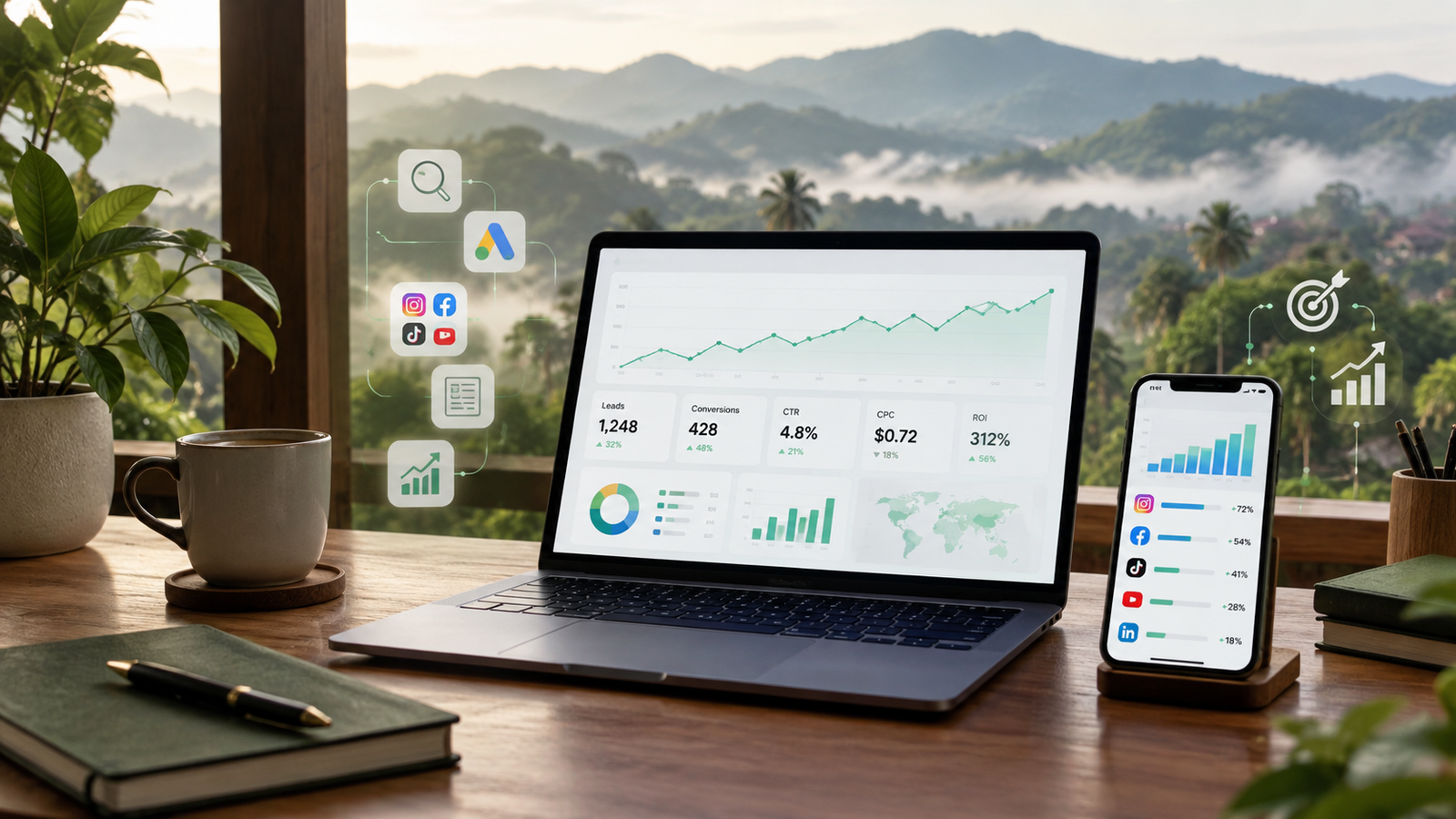
Performance Marketing vs Digital Marketing is a common question among business owners, startups, entrepreneurs, and professionals who want to grow their business online. While these two terms are closely related, they are not exactly the same. Digital marketing is the broader field of promoting a business through digital channels such as search engines, social media, websites, content, email, and online advertising. Performance marketing is a more results-focused approach that emphasizes measurable actions such as leads, sales, enquiries, bookings, and conversions. Understanding the difference can help businesses choose the right marketing strategy based on their goals, audience, budget, and growth objectives. For businesses in Wayanad, Kerala, this distinction is particularly useful because local businesses can combine organic search visibility, Google Ads, social media, content, and conversion-focused strategies to reach potential customers more effectively. What Is Digital Marketing? Digital marketing is the process of promoting a business, product, service, or brand using digital platforms and technologies. It covers a wide range of marketing activities, from building brand awareness and attracting website visitors to generating leads and maintaining relationships with customers. Some major areas of digital marketing include: Search Engine Optimization (SEO) Google Ads and paid advertising Social media marketing Content marketing Search Engine Marketing (SEM) Email marketing Website development and optimization SEO copywriting Google Business Profile optimization Online reputation management For example, a tourism business in Wayanad could use SEO to appear in relevant Google searches, create social media content to showcase its services, publish helpful travel guides, optimize its Google Business Profile, and use Google Ads to reach people actively searching for accommodation or experiences. All of these activities can form part of a broader digital marketing strategy. What Is Performance Marketing? Performance marketing is a data-driven approach to digital marketing that focuses on measurable business outcomes. Instead of measuring success only through impressions or audience reach, performance marketing places greater emphasis on what users actually do after interacting with a campaign. Depending on the business, these actions could include: Website enquiries Phone calls WhatsApp enquiries Form submissions Product purchases Online bookings App installations Registrations Lead generation Performance marketers use campaign data to understand which advertisements, keywords, audiences, landing pages, and strategies are producing useful results. Common performance marketing metrics include CPC, CTR, CPL, conversion rate, customer acquisition cost, ROAS, and ROI. The goal is not simply to run an advertisement. It is to measure, learn, optimize, and improve the campaign based on meaningful data. Performance Marketing vs Digital Marketing: The Key Difference The easiest way to understand the difference is: Digital marketing is the broader discipline, while performance marketing is a results-focused approach within the digital marketing ecosystem. Digital Marketing Performance Marketing Broad online marketing discipline Results-focused marketing approach Includes organic and paid strategies Strong focus on measurable outcomes Can focus on awareness, engagement, traffic, leads, or sales Focuses heavily on actions such as leads, sales, and conversions Includes SEO, social media, content, email, PPC, etc. Commonly uses Google Ads, paid social, affiliate marketing, and conversion-focused campaigns Can involve long-term brand building Often involves continuous testing and optimization Uses multiple performance indicators Closely tracks defined KPIs Therefore, performance marketing and digital marketing are not competing concepts. Performance marketing can be part of a wider digital marketing strategy. Is Performance Marketing Part of Digital Marketing? Yes. Performance marketing can be considered a specialised, results-orientated approach within digital marketing. For example, Google Ads is a digital marketing channel. A business can use Google Ads simply to increase visibility, or it can structure campaigns around specific conversion goals. If the business tracks: Ad click → Landing page visit → Enquiry → Qualified lead → Customer and uses the resulting data to optimize campaigns, it is taking a performance marketing approach. The same principle can apply to paid social media campaigns, affiliate marketing, lead-generation campaigns, and other measurable digital activities. How Does Digital Marketing Work? A digital marketing strategy usually brings several channels together to support a business objective. A typical process may look like this: Research → Strategy → Content → Promotion → Traffic → Engagement → Conversion → Measurement For example, a business may first research its target audience and competitors. It can then optimize its website, create useful content, build social media visibility, run advertising campaigns, and measure how users interact with these channels. The exact strategy depends on the business and its goals. How Does Performance Marketing Work? Performance marketing usually follows a more measurement-focused process: Define goal → Identify audience → Choose channel → Launch campaign → Track conversions → Analyze data → Optimize → Scale Suppose a Wayanad-based service business wants to generate enquiries. The campaign could begin by identifying relevant search terms and audiences. Google Ads could then be used to reach people with relevant intent. A dedicated landing page could encourage users to contact the business. The marketer can then measure: Number of clicks Advertising cost Number of enquiries Cost per enquiry Conversion rate Lead quality Based on these insights, campaign settings can be adjusted. A Simple Digital Marketing Example Imagine a Wayanad resort wants to increase its online presence. A broader digital marketing strategy could include: SEO for accommodation-related searches. Travel blog content about Wayanad. Google Business Profile optimization. Instagram and Facebook content. Website improvements. Google Ads campaigns. Customer review management. The objective may be to improve brand awareness, organic visibility, website traffic, enquiries, and bookings. This illustrates how digital marketing can involve multiple channels working together. A Simple Performance Marketing Example Now imagine the same resort wants to generate more direct booking enquiries. A performance-focused campaign might: Identify high-intent search queries. Create targeted Google Ads campaigns. Build a conversion-focused landing page. Track calls, forms, WhatsApp clicks, and bookings. Measure cost per lead. Test different advertisements. Analyze keyword and audience performance. Optimize the campaign based on the data. Here, the emphasis is on measurable actions and business outcomes. Which Is Better: Performance Marketing or Digital Marketing? There is no universal answer because the two approaches can serve different objectives. A business